
What A First-Timer Actually Needs To Know Before Booking
Golden monkey tracking rarely gets planned as a trip’s centrepiece, and it should not be. Its real value is as one of the easiest, lowest-cost, most rewarding additions to a Rwanda or southwest Uganda itinerary that is already built around gorilla trekking. Understanding exactly how it fits alongside that bigger booking, rather than treating it as a separate decision, is the most useful thing a first-timer can know before planning this activity. The practical questions below follow the order you will actually need to work through them.
Choosing Where To Track Golden Monkeys
This is one of the simpler decisions in an entire African primate itinerary precisely because the two options are so similar in what they actually deliver. Neither Rwanda’s nor Uganda’s golden monkey population differs meaningfully in size, habituation quality or viewing reliability, which means the choice comes down almost entirely to which side of the Virunga range your broader itinerary already has you based in, rather than any golden-monkey-specific reason to prefer one park over the other.
Why Golden Monkey Tracking Almost Always Rides Along With Something Bigger
Very few travellers arrive in Rwanda or southwest Uganda with golden monkey tracking as their primary reason for the trip. It is, almost without exception, layered onto an itinerary already built around gorilla trekking, sometimes with a golden monkey excursion added the same week almost as an afterthought once travellers realise how little extra time and cost it requires relative to how memorable the encounter turns out to be. Recognising this pattern in advance helps first-timers plan realistically: budget the time and modest cost for this activity as an add-on line within a larger trip, not as a separate expedition requiring its own dedicated planning cycle.
Two Countries, One Mountain Range
Golden monkey tracking happens in exactly two places: Rwanda’s Volcanoes National Park and Uganda’s Mgahinga Gorilla National Park, both sitting within the same Virunga volcanic range. Because both countries also offer gorilla trekking within the same general area, most travellers end up choosing their golden monkey tracking location simply by matching it to whichever country they have already chosen for gorilla trekking, rather than treating it as an independent decision.
Why This Rarely Needs Its Own Standalone Trip
Unlike gorilla trekking or chimpanzee trekking, which sometimes justify travelling specifically for that one activity, golden monkey tracking is short, inexpensive and logistically simple enough that building an entire trip around it alone rarely makes sense. Almost every itinerary that includes golden monkey tracking includes it as an addition to gorilla trekking in the same park system, not as a standalone destination choice.
What This Actually Costs
Set against gorilla trekking’s four-figure permit cost in Rwanda specifically, a hundred-dollar golden monkey permit barely registers as a budget line, which is part of why so few travellers who have already committed to gorilla trekking in the region skip adding it. The return on that modest cost, a genuinely different, visually striking encounter with a species found nowhere else on Earth, is difficult to match anywhere else in African primate tourism at a comparable price point.
A golden monkey permit runs around 100 US dollars, a small fraction of even the least expensive gorilla permit, making this one of the most cost-effective primate encounters available anywhere in East Africa. Because the permit is inexpensive and the trek itself short, golden monkey tracking adds relatively little to a trip’s total budget compared to the outsized addition it makes to the overall experience.
How Fit You Need To Be
Considerably less demanding than gorilla or chimpanzee trekking. Treks typically run two to four hours round trip over gentler terrain than a standard gorilla trek involves, making this one of the more accessible primate activities on offer for travellers with moderate fitness, older family members, or anyone looking for a lower-intensity day between more demanding treks elsewhere on the itinerary.
How Fit You Need To Be, In More Detail
Where a gorilla trek can genuinely run anywhere from thirty minutes to six hours depending on where the family settled overnight, golden monkey troops range across a somewhat more predictable, gentler stretch of bamboo forest, which keeps trek duration and difficulty considerably more consistent day to day. This predictability is part of why golden monkey tracking works so well as the lower-intensity half of a two-activity day for travellers doing both a gorilla trek and a golden monkey excursion within the same 24 to 48 hours, since the body simply is not asked to repeat the same level of physical demand twice in quick succession.
A Realistic Walkthrough Of The Day
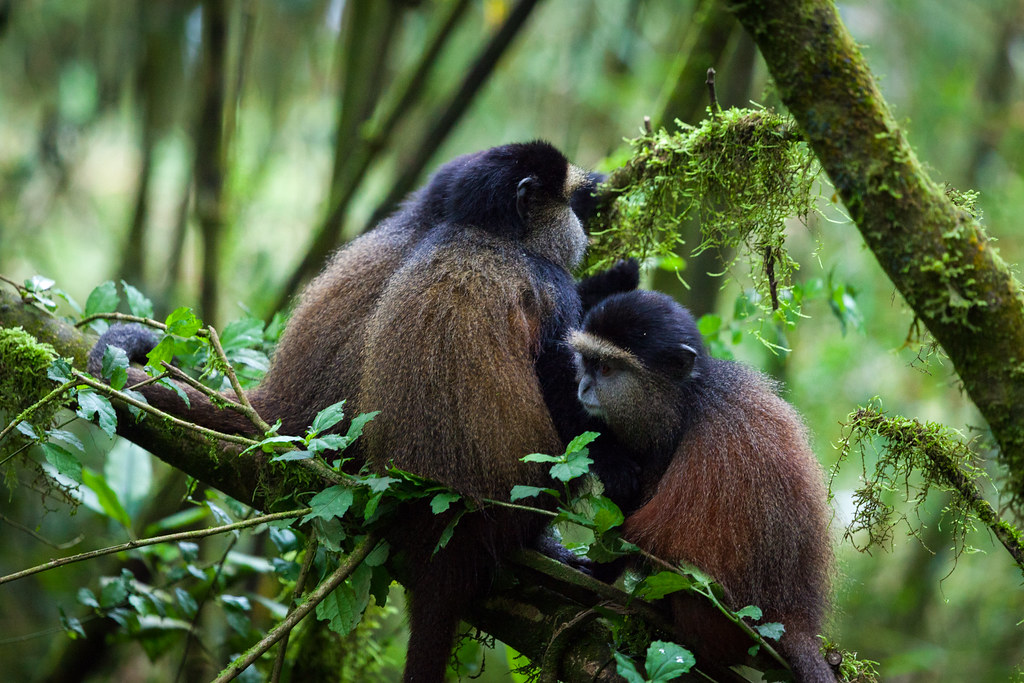
Your morning starts with a briefing at park headquarters, considerably more relaxed in tone than a gorilla trekking briefing given the lower physical demands involved. The hike into the bamboo zone is generally shorter and gentler than gorilla trekking terrain, and once your group reaches the troop, a golden monkey encounter looks and feels markedly different from a gorilla sighting: dozens of monkeys moving fast and constantly through bamboo stems rather than one still, watchful family. The standard viewing window still runs around one hour, though the constant movement of a large troop means the visual experience during that hour is far busier and more kinetic than gorilla trekking.
Pairing This With Gorilla Trekking On The Same Trip
Guides familiar with both activities generally recommend scheduling the golden monkey excursion the day after gorilla trekking rather than before, letting the more physically demanding activity happen first while energy levels are freshest, though either order works logistically and some travellers prefer easing into the trip with the gentler activity first.
Most itineraries schedule golden monkey tracking on the morning or afternoon either immediately before or after a gorilla trek, since both activities run from the same general lodging base in either Volcanoes National Park or Mgahinga. This scheduling efficiency is one of the strongest practical arguments for choosing Rwanda or southwest Uganda specifically for gorilla trekking, since it lets you add a genuinely different, memorable primate encounter without an extra travel day or a change of accommodation.
Booking Timing And Availability
Golden monkey permits are considerably easier to secure on shorter notice than gorilla permits, since the activity draws fewer visitors overall and the daily permit allocation is less tightly constrained. That said, we still recommend confirming golden monkey tracking at the same time you book your gorilla trekking permit, simply so both activities align cleanly on your itinerary’s calendar rather than requiring a separate booking conversation closer to your travel dates.
What To Pack
None of this gear needs to be purchased specifically for golden monkey tracking if you are already equipped for gorilla trekking on the same trip; the same core kit covers both activities comfortably.
The packing list here is a lighter version of what gorilla trekking requires: sturdy walking shoes rather than necessarily full hiking boots, a light rain layer, and a camera with a reasonably fast shutter speed, since golden monkeys move quickly enough that standard gorilla-trekking camera settings often produce blurred shots. Given the shorter, gentler trek, a smaller daypack than you would carry for a full gorilla trekking day is generally sufficient.
Who Gets The Most Out Of This Activity
Repeat travellers returning to the region for a second or third gorilla trekking trip also frequently add golden monkey tracking specifically because it offers a genuinely fresh encounter within a familiar destination, rather than repeating an activity they have already experienced closely on a previous visit.
Families travelling with children too young for gorilla trekking’s fifteen-year minimum age find golden monkey tracking, which has no strict age minimum, one of the more accessible primate activities available to the whole group together. Photographers who have already done a calmer gorilla trek often find the faster-paced, more chaotic golden monkey encounter a refreshing change of pace and a genuinely different photographic challenge worth the modest extra cost and time.
Common First-Timer Questions
A few questions come up often enough to address directly here.
Many travellers ask whether golden monkey tracking is worth doing if they are not planning to see gorillas on the same trip. It generally still is, particularly for travellers focused specifically on primate diversity, though the logistics of visiting Volcanoes National Park or Mgahinga purely for this one activity make more sense as part of a broader Rwanda or Uganda itinerary rather than a dedicated single-purpose trip. Others ask whether the shorter trek and lower cost mean a less worthwhile experience overall; guides and repeat travellers alike generally disagree, describing golden monkey tracking as one of the most visually memorable primate encounters available specifically because of how different its energy is from every other trekking activity on a typical itinerary.
Booking Your Golden Monkey Tracking Excursion
Our golden monkey tracking tours page has current permit details for both Rwanda and Uganda. Reach out through our contact page and we will slot this into your gorilla trekking itinerary at whatever point in your trip makes the most logistical sense.