
What A First-Timer Actually Needs To Know Before Booking
Think of this less as a single how-to-book guide and more as a field-reference approach to a genus you will likely encounter several times across a longer trip, each time potentially involving a different specific species.
Guenons present a slightly different planning challenge than most other species in this series, not because seeing one requires a special permit, it does not, but because “guenon” covers such a wide range of distinct species that a first-timer’s real question is rarely “how do I book a guenon sighting” and more often “which specific guenon species will I actually see, and where.” This guide addresses that more practical version of the question, focusing on how guenon sightings fold into forest activities you are likely already planning rather than treating this as a standalone booking decision.
Why “Guenon” Is A Category, Not A Single Species
It is worth repeating this point clearly before going further, since it genuinely changes how you should think about planning around this group. More than two dozen distinct species fall under the guenon umbrella, each with its own range, facial markings and, in some cases, meaningfully different behaviour. Treating a trip’s “guenon sighting” as a single checklist item the way you might treat gorilla trekking misses this diversity entirely, and first-timers who understand this distinction going in generally get considerably more out of the actual encounters, since they know to pay attention to which species they are actually seeing rather than mentally filing every sighting under one generic label.
Where You Will Actually Encounter Guenons
A Byproduct Of Forest Walks And Trekking
Guenon species turn up incidentally across forest monkey tracking and nature walk tours in Uganda, Rwanda and the Congo Basin countries, as well as during gorilla and chimpanzee trekking in the same forest systems. No dedicated guenon-specific permit or activity exists in our destination countries.
Which Species You Will See Depends Entirely On Location
Unlike species with a single consistent range, which specific guenon you encounter changes considerably by country and even by specific forest, since different guenon species occupy different, sometimes only lightly overlapping territories. A forest walk in Uganda will likely turn up different guenon species than an equivalent walk in Gabon or Cameroon.
What This Costs
Budget accordingly: nothing extra, regardless of how many different guenon species end up crossing your path across a longer, multi-destination itinerary.
This cost structure holds regardless of how many distinct guenon species you might encounter across a multi-destination trip; there is no per-species fee or escalating cost as your sighting count grows, unlike the individually permitted species elsewhere in this series.
Nothing beyond the standard cost of whatever forest walk or trekking activity you are already doing, since guenon sightings happen incidentally rather than through a dedicated permit system.
How Fit You Need To Be
Since no separate guenon-specific booking exists, this consideration simply inherits whatever your chosen activity already requires, one more reason to plan around guenon sightings as a bonus layered onto other activities rather than a standalone fitness or logistics question.
Entirely dependent on which activity you encounter guenons during. A relaxed nature walk requires minimal fitness, while an incidental guenon sighting during gorilla or chimpanzee trekking inherits whatever physical demand that activity already carries.
Mixed-Species Groups Add Another Layer Of Complexity
Several guenon species genuinely forage together in mixed-species associations, meaning a single sighting can sometimes involve two different guenon species moving through the same patch of canopy at once, a detail worth knowing so you do not assume an unusually variable-looking troop is simply one species displaying more coat pattern variation than expected. Guides familiar with a specific forest’s typical mixed-species groupings can point this out in real time, turning what might otherwise look like a confusing, inconsistent sighting into a genuinely interesting observation about interspecies cooperation.
A Realistic Walkthrough Of A Typical Sighting
Guenon sightings tend to happen fast and require quick attention, since these are generally small, agile, canopy-dwelling monkeys that move continuously through fruiting trees rather than settling in one visible spot the way a resting gorilla family does. Guides familiar with a specific forest’s resident guenon populations are often better at spotting and identifying species quickly than visitors attempting to do so independently, given how much identification depends on subtle facial and coat pattern differences between closely related species.
Identifying What You Are Actually Looking At
Taking a quick photograph specifically for identification purposes, even a hurried, imperfect shot, is genuinely useful here, since it lets your guide or later research confirm a species after the fact when a fast-moving, brief sighting did not allow enough time for a confident identification in the moment.
Given how many distinct guenon species exist, do not assume every mid-sized forest monkey sighting is the same species simply because it looks broadly similar from a distance. Ask your guide to confirm the specific species when possible, since this is genuinely useful information for understanding what you actually saw, particularly if a specific species like De Brazza’s monkey, with its distinctive orange brow and white beard, is high on your personal list of primates to encounter.
Requesting A Specific Guenon Species
De Brazza’s monkey specifically, given its striking appearance and association with swamp and riverine forest habitat, is worth naming directly if it is a priority, since its habitat requirements are narrower than many other guenon species and not every forest destination on our list supports it equally well.
If a particular guenon species genuinely interests you, mention it specifically when planning your itinerary rather than assuming any forest walk will do. Different countries and forests support different guenon species, and routing your trip through the specific location known for your target species meaningfully improves your odds compared to leaving the encounter entirely to chance.
Talking To Your Guide In Advance
A brief conversation with your guide before a forest walk, mentioning that you would like species identified where possible rather than treated as a generic “monkey sighting,” is often all it takes to get considerably more out of every guenon encounter across the trip. Most guides are genuinely happy to share this level of detail once they know a guest is interested, but do not always volunteer it unprompted during a faster-paced group walk.
Photography Considerations
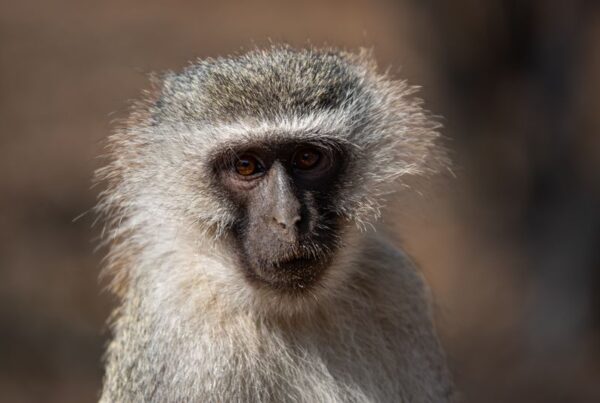
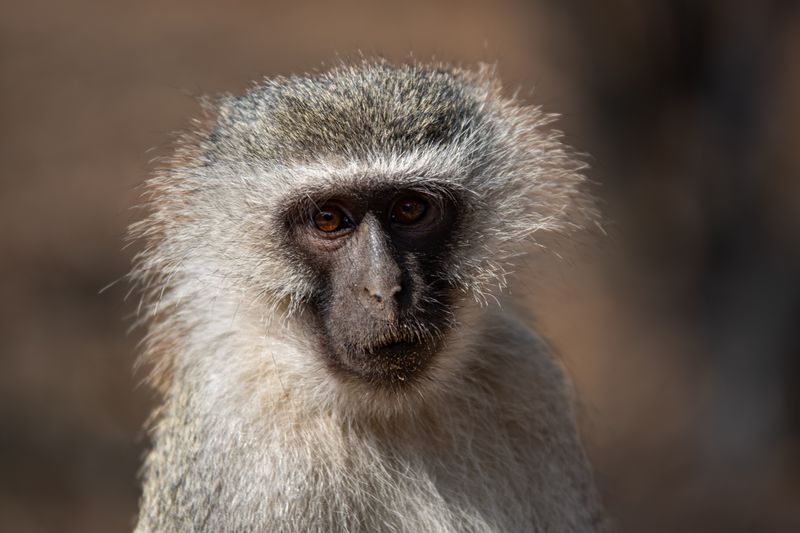
Because facial markings are often the clearest way to distinguish one guenon species from another, prioritise getting a clear shot of the face over a wider body shot whenever a sighting allows the choice, since a body-only photograph is frequently harder to identify confidently afterward than even a slightly blurred close-up of the distinctive facial pattern.
Guenons move quickly through the canopy, similar to golden monkeys in this respect, which means a faster shutter speed and reasonable telephoto reach serve you better than the calmer, more static settings appropriate for gorilla photography. Patience matters more than positioning, since a guenon that disappears behind foliage one moment often reappears in a clearer gap seconds later.
Common First-Timer Questions
A handful of practical questions come up often enough to address here directly.
Some travellers ask whether guenons are dangerous or bold around humans the way some habituated vervet or baboon populations can be. Generally not; most guenon species remain considerably more forest-committed and wary of close human contact than the more terrestrial, lodge-adjacent species discussed elsewhere in this series, making direct interaction concerns largely a non-issue here.
Travellers sometimes ask whether it is worth a dedicated activity purely for guenon viewing. For most itineraries already including forest walks or primate trekking, a specific booking is unnecessary since sightings happen naturally as part of time spent in suitable habitat. Others ask how many species they might realistically see on one trip; a well-planned multi-country itinerary touching different forest systems can realistically turn up three or four distinct guenon species without any single one requiring dedicated planning.
Building Guenon Diversity Into A Multi-Country Trip
Travellers specifically interested in maximising guenon species diversity across a single trip benefit most from an itinerary that deliberately spans multiple distinct forest ecosystems rather than concentrating time in just one country or park. Combining East African forest walks with a Congo Basin extension, for instance, exposes you to a genuinely different set of guenon species than either region would offer alone, since the two areas support largely non-overlapping populations within this diverse genus.
A Final Practical Note
None of this diversity should feel like a burden to plan around. In practice, guenon sightings remain one of the lower-stress, lower-cost parts of any itinerary, and the extra layer of species identification interest is entirely optional rather than something you need to master before your trip.
Planning Around This Diverse Group
Reach out through our contact page if a specific guenon species interests you, and we will route your itinerary through the forest destination best known for it, or simply flag it to your guide so extra attention goes toward identifying species during any forest activity already on your schedule.