
Two Ways To Spend Time With A Gorilla Family
This comparison comes up constantly in early conversations with travellers planning a Uganda trip, usually once they discover the habituation option exists at all and start wondering whether the standard trek they had already planned is somehow the lesser experience. It is not, and understanding why takes working through what each option actually involves rather than assuming a longer, more expensive day is automatically the better one.
Travellers researching a gorilla trip often assume there is only one way to do it: book a permit, hike into the forest, get an hour with a habituated family. That is standard gorilla trekking, and it remains the right choice for most people. But a second option exists in Uganda’s Rushaga sector of Bwindi Impenetrable National Park, called the gorilla habituation experience, and it is different enough from standard trekking that understanding the distinction matters before you book either one.
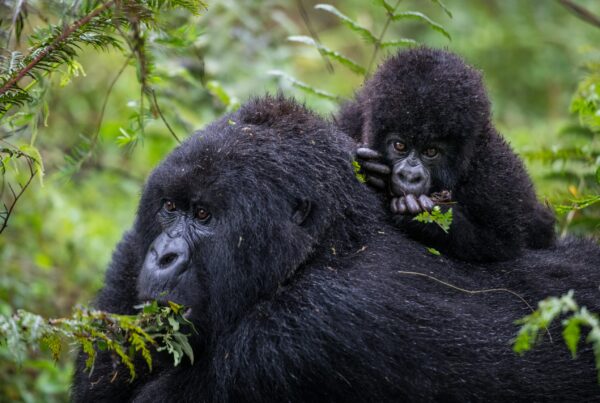
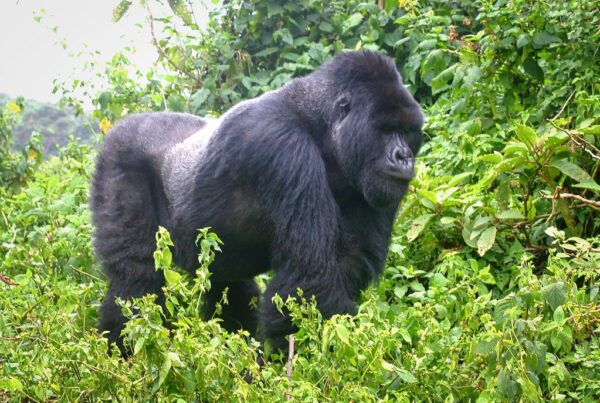
The short version is this: standard trekking gives you a fixed hour with a fully habituated family, while habituation gives you up to four hours with a family that is still partway through the process of getting used to humans. Both put you close to wild mountain gorillas. They are not interchangeable experiences, and each suits a different kind of traveller.
What Standard Gorilla Trekking Actually Involves
It helps to picture the two side by side before comparing the finer details. On a standard trek, your relationship with the gorilla family is brief and structured: you arrive, you observe for a fixed window, you leave. On a habituation day, that relationship stretches out and becomes something closer to shadowing a team at work, watching how trust between researchers and a wild family gets built one careful visit at a time. Both are genuine encounters with wild mountain gorillas. The texture of the day around that encounter is where they diverge.
A standard trek starts with a briefing at park headquarters, where rangers assign each visitor group to one of several already-habituated families based on where trackers last located them. The hike itself varies widely, from thirty minutes to six hours, since it depends entirely on where the family chose to feed and sleep the previous night. Once found, you get exactly sixty minutes with the family before moving back to a respectful distance and heading out.
This is the more predictable, better-established option, available across all three trekking countries and across more sectors within each park. Groups run up to eight visitors per family, and the families themselves are fully accustomed to human presence, generally calmer and less likely to be disturbed by a group’s arrival than a family still being habituated.
What Makes Habituation Different
Habituation is the multi-year process rangers and researchers use to gradually acclimatise a wild gorilla family to tolerating human observers at close range without becoming stressed or defensive. It happens slowly, with small teams visiting the same family repeatedly over months or years until the gorillas stop reacting to their presence as a threat.
The habituation experience tour lets a small number of visitors, capped at four rather than the usual eight, join that ongoing process directly. Your time with the family stretches to up to four hours instead of sixty minutes, and you spend much of that time watching the habituation team work rather than simply observing the gorillas from a fixed position. It is currently available only in Bwindi’s Rushaga sector, and only in Uganda.
What The Two Groups Of Visitors Actually Notice
Travellers who have done both consistently describe standard trekking as feeling more like a wildlife sighting, focused and time-boxed, and habituation as feeling more like accompanying a working research team that happens to include watching gorillas. Neither description implies one is more worthwhile than the other. It simply reflects how differently the two days are structured, from the size of your group to the pace at which the team moves once the family is located.
One detail surprises most habituation visitors: a meaningful portion of the extended time is spent learning directly from the accompanying researchers and trackers about how they read individual gorillas’ personalities and behavioural patterns, information that rarely comes up in the more time-constrained format of a standard trek.
Comparing The Practical Details
Cost is one clear difference. A standard Uganda gorilla permit runs around eight hundred US dollars, while the habituation experience costs close to fifteen hundred, reflecting both the smaller group size and the longer, more resource-intensive day for the accompanying team. Physical demand differs too. Both involve genuine trekking, but a habituation day runs longer overall, often starting earlier and returning to the lodge later, simply because your in-forest time with the family is up to four times as long as a standard visit.
Group size affects the feel of the experience directly. Four visitors moving quietly with a research team creates a noticeably different atmosphere than eight visitors on a standard trek, something worth weighing if a more intimate, less crowded encounter matters to you.
Who Standard Trekking Suits Best
Most first-time visitors are well served by standard trekking. It costs less, runs in more locations across Uganda, Rwanda and DRC, and gives you a genuinely close encounter with wild mountain gorillas without requiring an especially long or demanding day. If your primary goal is simply experiencing a gorilla family in the wild, at a reasonable cost, with flexibility on which country and park you visit, standard trekking is very likely the right choice, and it is what most of our gorilla trekking itineraries are built around.
Who Should Consider Habituation Instead
The habituation experience suits a narrower group: travellers who have already done a standard trek and want something deeper, wildlife enthusiasts genuinely interested in the science and process of habituation rather than just the sighting itself, and anyone for whom a longer, quieter, smaller-group encounter is worth the higher price and longer day. It is not a better version of standard trekking so much as a different kind of experience built around access and depth rather than efficiency.
Photographers sometimes gravitate toward habituation for the extended time it allows, though our dedicated photography tours are worth comparing directly, since they are built specifically around light, positioning and patience rather than research access.
Where Each Option Is Actually Available
This is where the decision sometimes makes itself. Standard gorilla trekking runs across all three trekking countries, Uganda, Rwanda and DRC, and across multiple sectors within Bwindi alone: Buhoma, Ruhija, Rushaga and Nkuringo each host their own habituated families. The habituation experience, by contrast, exists only in Uganda, only in Rushaga, and only with a small number of daily permits, since the program depends on having a family currently partway through the habituation process rather than fully settled.
Practically, this means travellers set on visiting Rwanda or DRC are choosing standard trekking by default, since habituation simply is not offered there yet. Only travellers already building a Uganda-based itinerary, and specifically one that includes Rushaga, have a genuine choice between the two.
Booking Timelines For Each
Because habituation permits are limited to four visitors per day rather than eight, and only issued in one sector, they sell out further in advance relative to their availability than standard permits do. Travellers set on a habituation experience should plan to book several months ahead, more conservatively than standard trekking requires in Uganda’s other sectors. Standard permits, spread across more families and more locations, generally offer more flexibility for travellers finalising dates closer to their trip.
Making The Choice For Your Trip
Neither option is objectively better, and neither replaces the other. Think about what you actually want from the encounter: efficiency and value point toward standard trekking, while depth, a smaller group and genuine interest in the habituation process itself point toward the Rushaga experience. Budget and time both factor in too, since habituation costs more and demands a longer day than most travellers realise going in.
If you are still unsure which fits your trip, tell us your priorities, budget and dates through our contact page, and we will help you decide based on your specific circumstances rather than a generic recommendation.
Questions Travellers Ask When Comparing The Two
Can I do both on the same trip?
Yes, and some travellers do exactly this, booking a standard trek in one sector of Bwindi and a habituation experience in Rushaga a day or two later. It makes for a longer, more expensive trip, but it also gives a genuinely different perspective on the same species within a single itinerary.
Is habituation more likely to end without a sighting?
No. Both experiences track a specific known family, located by rangers before your day begins, so the likelihood of a sighting is comparable between the two. What differs is the length and character of your time with them once found, not the probability of finding them at all.
Which one is better for children?
Both carry the same minimum age requirement of fifteen, set by park authorities for disease-transmission reasons rather than difficulty. Between the two, standard trekking is the more practical choice for younger teenagers simply because the day is shorter and less physically demanding overall.