What are Gorillas
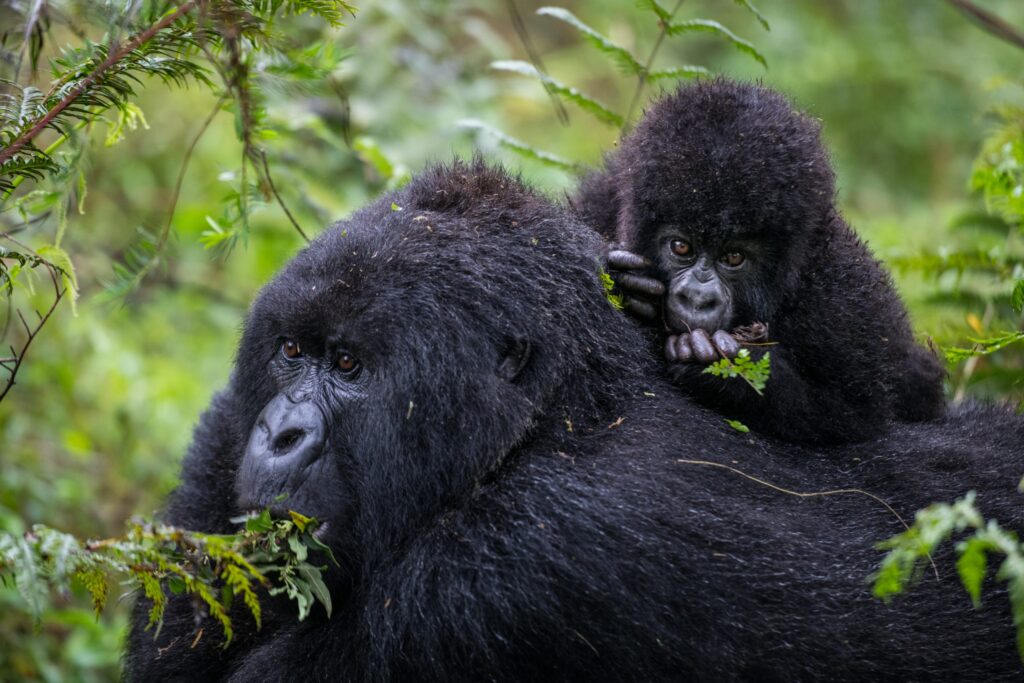
What Are Gorillas?
Gorillas are the largest living primates on Earth and are among humanity’s closest relatives, sharing about 98% of their DNA with humans. These gentle giants belong to the genus Gorilla and live in the forests of Central and East Africa. Despite their enormous size and strength, gorillas are generally peaceful animals that spend most of their time feeding, resting, and caring for their families.
Gorillas live in social groups known as troops or families, led by a dominant adult male called a silverback. The silverback is responsible for protecting the group, making decisions about movement and feeding areas, and resolving conflicts within the family. A typical gorilla family may include several females, young gorillas, and infants.
There are two species of gorillas: the Eastern Gorilla and the Western Gorilla. Each species is further divided into subspecies. The Eastern Gorilla includes the Mountain Gorilla and the Eastern Lowland Gorilla, while the Western Gorilla includes the Western Lowland Gorilla and the Cross River Gorilla.
Where Do Gorillas Live?
Gorillas are found in tropical and subtropical forests across Central Africa. Mountain gorillas live in the high-altitude forests of Uganda, Rwanda, and the Democratic Republic of Congo. Uganda is home to nearly half of the world’s remaining mountain gorilla population, primarily found in Bwindi Impenetrable National Park and Mgahinga Gorilla National Park.
Eastern lowland gorillas inhabit the lowland rainforests of eastern Democratic Republic of Congo, while western gorillas are found in countries such as Cameroon, Gabon, Equatorial Guinea, the Republic of Congo, and the Central African Republic.
What Do Gorillas Eat?
Gorillas are primarily herbivores. Their diet consists mainly of leaves, stems, shoots, roots, fruits, and bark. Mountain gorillas consume large quantities of vegetation every day, often spending several hours feeding.
Adult gorillas can eat up to 30 kilograms of vegetation daily. They rarely drink water directly because they obtain most of their moisture from the plants they eat.
How Big Are Gorillas?
Adult male gorillas, known as silverbacks, can weigh between 140 and 220 kilograms and stand up to 1.8 meters tall when upright. Females are smaller and usually weigh between 70 and 110 kilograms.
A silverback’s impressive size, broad chest, and powerful arms make it one of the strongest animals in the primate world.
Gorilla Behavior
Gorillas are highly intelligent animals with complex social structures. They communicate through vocalizations, facial expressions, body postures, and gestures. Scientists have observed gorillas using tools, solving problems, and displaying emotions such as affection, playfulness, grief, and empathy.
Contrary to popular belief, gorillas are not aggressive by nature. Silverbacks may display strength by chest beating, vocalizing, or charging when they feel threatened, but actual physical confrontations are uncommon.
Mountain Gorillas
Mountain gorillas are the most famous gorilla subspecies and are a major attraction for wildlife tourism in East Africa. They live in mountainous forests at elevations ranging from 2,200 to 4,300 meters above sea level.
Today, mountain gorillas can only be found in Uganda, Rwanda, and the Democratic Republic of Congo. Thanks to conservation efforts, their population has increased over the years, making them one of the few great ape species whose numbers are growing.
Gorilla Family Structure
A gorilla family is usually led by one dominant silverback. He protects the group from danger, determines where the family feeds, and maintains order among members.
Female gorillas give birth after a gestation period of about eight and a half months. Young gorillas stay close to their mothers for several years while learning survival skills and social behavior.
Infants are playful and often spend their time climbing trees, wrestling with other young gorillas, and exploring their surroundings.
Threats Facing Gorillas
Although gorilla populations have improved in some areas, they still face several threats. Habitat destruction, illegal poaching, disease transmission from humans, and political instability in some regions continue to affect their survival.
Conservation organizations, governments, local communities, and tourism initiatives play an important role in protecting gorillas and their habitats.
Gorilla Trekking
Gorilla trekking allows visitors to hike through forests in search of habituated gorilla families. Once located, visitors are permitted to spend one hour observing the gorillas in their natural habitat.
Uganda is one of the best destinations for gorilla trekking, offering unforgettable encounters in Bwindi Impenetrable National Park and Mgahinga Gorilla National Park. Trekking experiences provide visitors with a unique opportunity to observe gorilla behavior while supporting conservation efforts through tourism revenue.
Interesting Gorilla Facts
- Gorillas are the largest primates in the world.
- They share approximately 98% of their DNA with humans.
- A silverback can weigh more than 200 kilograms.
- Gorillas build a new nest every night for sleeping.
- Mountain gorillas live at high elevations in East Africa.
- Gorillas are mainly herbivores.
- They can live for more than 35 years in the wild.
- Each gorilla has a unique nose print, similar to a human fingerprint.
- Gorillas communicate using more than 20 different vocal sounds.
- Mountain gorillas are one of the greatest wildlife conservation success stories in Africa.